
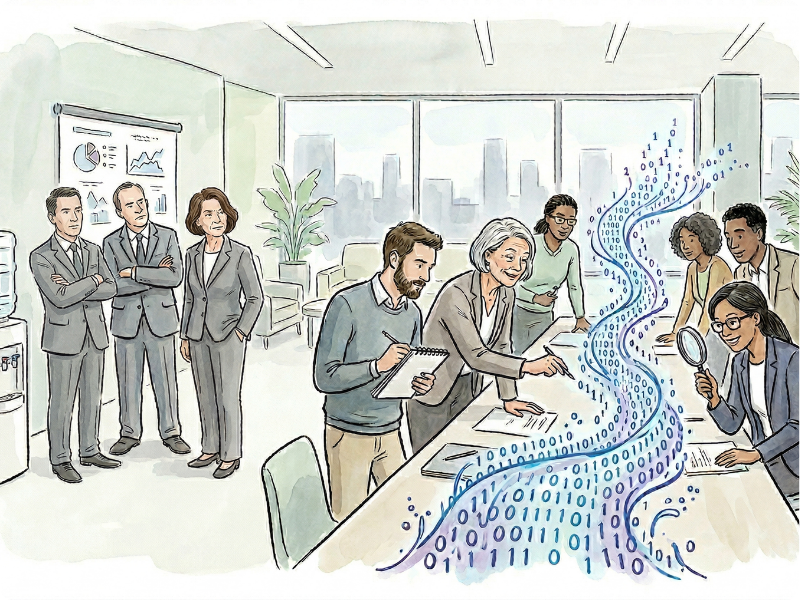
Why The Businesses That Succeed With AI Aren't The Ones That Saw It Coming
The trait that separates businesses thriving with AI from those still stalling isn't foresight - it's curiosity. Here's what nine years of the conversation taught me.
In 2017, I gave a talk on artificial intelligence at a financial services conference. I played a video by futurist Gerd Leonhard about exponential change - self-driving cars, computers that can learn and think, automation reshaping how we work [3]. Then I laid out what I thought was a fairly measured case: AI would start reshaping professional services within five years, and within ten, the changes would be sweeping.
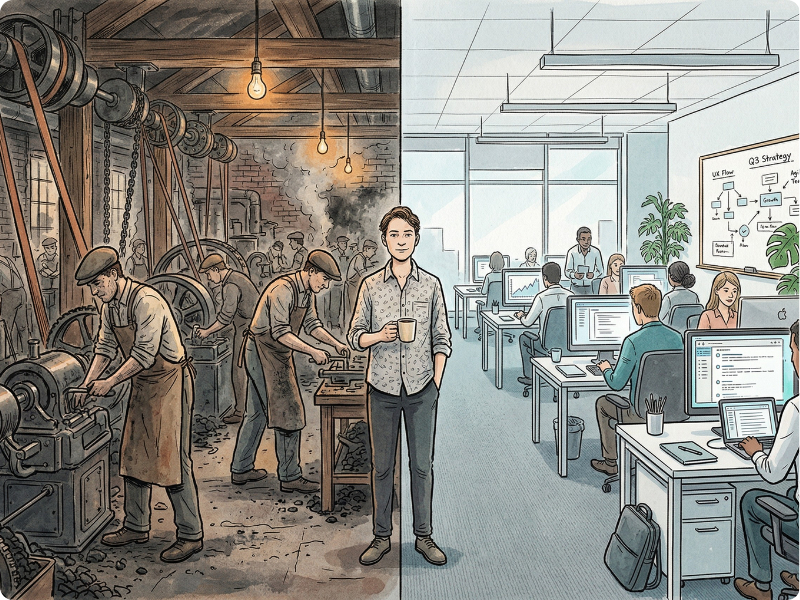
The Lights Came On in 1882. The Factory Changed in 1920.
In 1882, Thomas Edison flicked a switch and lower Manhattan had electric light. The technology worked. The capability was real. And for the next four decades, it made almost no difference to how businesses operated or what showed up in productivity data.

The Noise Is Deafening
The AI news cycle is relentless right now. Every morning brings a new model, a new capability, a new hot take. ChatGPT is dead, long live Claude. If you're not running n8n and OpenClaw and JigglyBear and OmNomNom - or whatever this week's flavour is - you're apparently three lightyears behind and probably also bad at business.
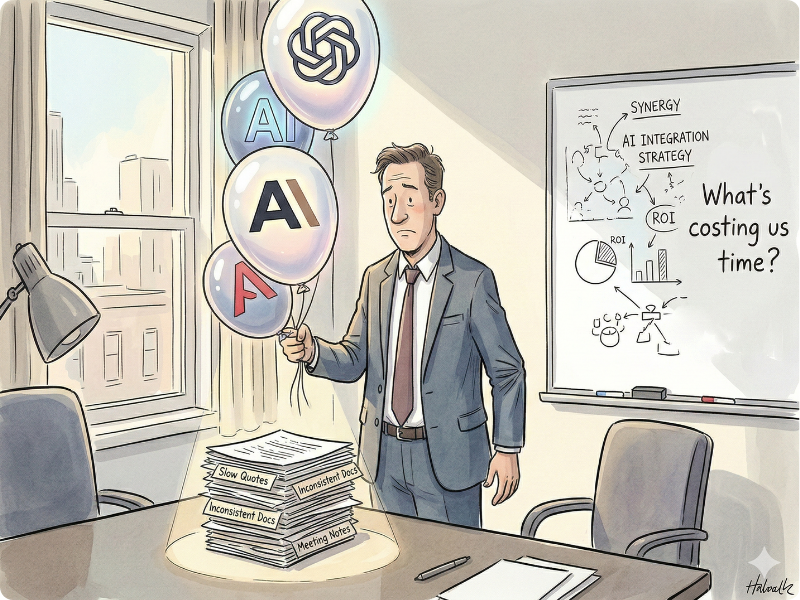
Where do you actually start with AI in your business?
Most business leaders I talk to are in the same position. They know AI is something they need to take seriously. They've probably had a few conversations about it, maybe sat through a vendor demo or two. And they've come away thinking: okay, but where do I actually start?
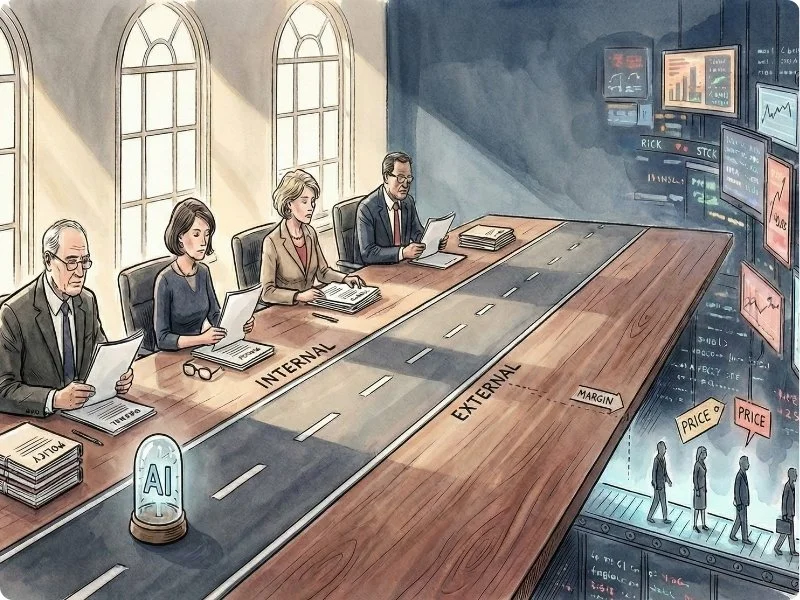
AI Governance For Boards: The Minimum Viable Oversight Model
Two questions every board should be able to answer: where is AI being used across the business right now — including tools staff have adopted without approval? And which parts of your revenue are most exposed to AI changing customer expectations or competitor economics? If either answer is vague, you've got a governance gap. This post sets out a practical, board-ready oversight model covering both lanes: internal controls and external market resilience. No 90-page policy suite required.

AI Risk to Business Model: A Structured Framework for Executive Teams
AI is reducing the cost of intelligence.
That sentence sounds abstract until you translate it into commercial reality: when intelligence becomes cheaper, many knowledge-heavy products and services face pricing pressure, faster substitution, and new competitors who can deliver “good enough” outcomes at radically lower cost.

I Hate the Word Strategy. But I Still Use It.
I once sat in a board meeting where the Chair declared that most people didn’t understand the word strategy. An awkward round of definition volleyball ensued - everyone batting around their own version, nobody quite sure who scored the point.
The underlying message was clear: strategy was the sacred domain of big-brained intellectuals.

How AI Is Reshaping Your Competitive Landscape
How to assess your competitive position when the rules are being rewritten.
Artificial intelligence isn’t just another technology trend - it’s a structural shift reshaping industries, business models, and entire markets. But with so much noise, hype, and rapid change, it can be hard for leaders to understand what AI actually means for their competitive position.
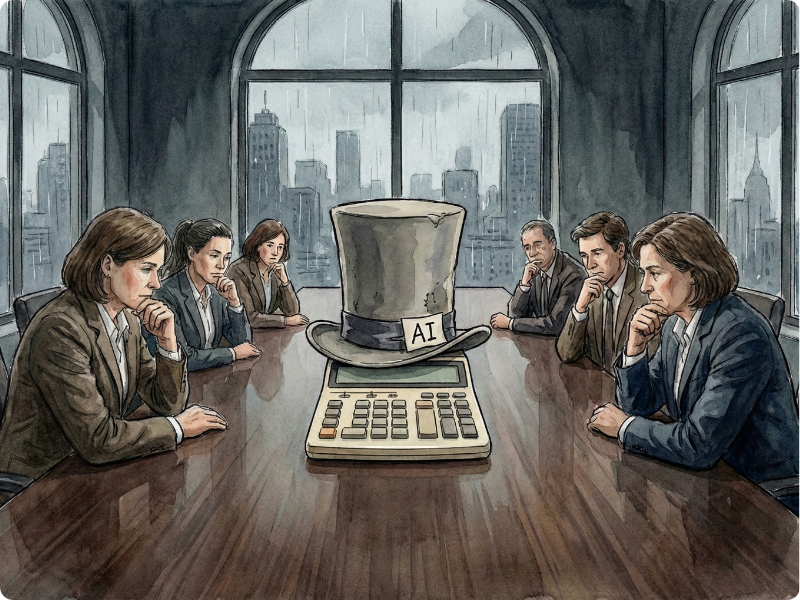
AI Project, or Just a Fancy Spreadsheet? Knowing When to Build, Buy, or Wait
There is a quiet trend happening inside businesses right now: everything is being labelled an "AI project".
Some of these are genuinely strategic.
Some are useful experiments.
Some are... well, a spreadsheet with better marketing.
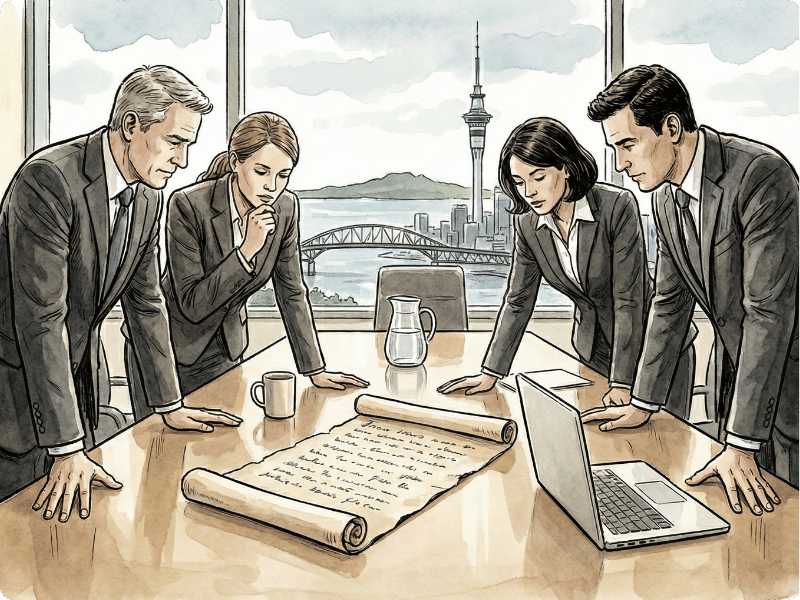
Sun Tzu’s Art of AI: Winning Competitive Advantage Without Going to War
“Victorious warriors win first and then go to war.” - Sun Tzu
AI isn’t a battlefield (thankfully), but in today’s competitive landscape, the organisations who succeed are the ones who prepare before they fight for market share.
They build capability. They build clarity. They build confidence.

Building AI Readiness: Turning Everyday Use Into Strategic Advantage
AI has already slipped quietly into daily work.
Someone in the office is using ChatGPT to draft emails. Another is generating lesson plans, summarising meeting notes, or experimenting with AI tools in Canva, Power BI, or Microsoft 365.
This early curiosity is incredibly valuable - it shows momentum, interest, and a desire to work smarter.